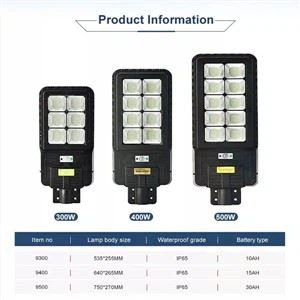
Hey there! As a supplier of solar street lights, I often get asked some interesting questions from customers. One of the most frequent ones is, "Can solar street lights be connected to a smart home system?" Well, let's dive right into this topic and find out.
First off, let's talk a bit about solar street lights. We've got a great range of them, like Anti-salt Spray Solar Street Lights. These are super useful if you live near the coast or in an area with a lot of salt in the air. They're built to withstand the harsh conditions and keep shining bright. Then there's the Solar Cob Street Light. It uses COB (Chip on Board) technology, which gives off a really bright and even light. And for those who want more control over the light intensity, we have the Led Street Light with Auto Intensity Control. This one can adjust its brightness based on the surrounding light conditions.
Now, back to the main question: Can solar street lights be connected to a smart home system? The short answer is yes, in many cases. But it's not always a one - size - fits - all situation.
Let's start with the technology behind it. Most modern smart home systems work on wireless communication protocols like Wi - Fi, ZigBee, or Z - Wave. These protocols allow different devices in your home to "talk" to each other and be controlled from a central hub, usually through a smartphone app.
For solar street lights to be connected to a smart home system, they need to have the right communication module built in. Some of our advanced models come with these modules pre - installed. When you set up your smart home system, you can simply follow the pairing instructions in the app to add the solar street lights to the network.
Once they're connected, you can do a whole bunch of cool things. For example, you can turn the lights on and off remotely. Say you're coming home late at night and you want your driveway to be well - lit as soon as you arrive. You can just open the app on your phone and switch on the solar street lights from wherever you are.
You can also set schedules for the lights. Maybe you want them to turn on at sunset and turn off at sunrise automatically. With a smart home connection, you can program these settings easily. And if you're going on vacation, you can set the lights to turn on and off at random times to give the impression that someone is home, which is a great security feature.
Another advantage of connecting solar street lights to a smart home system is energy management. You can monitor the energy consumption of the lights through the app. This helps you keep track of how much power they're using and make adjustments if needed. For instance, if you notice that the lights are using more energy than usual, you can check if there are any malfunctions or if you need to adjust the brightness settings.
However, there are some challenges too. One of the main issues is the range of the wireless signal. If your solar street lights are far away from the smart home hub, the signal might not reach them properly. This could result in a weak connection or the lights not responding to your commands. To solve this problem, you might need to install signal repeaters or use a different communication protocol that has a longer range.
Also, not all solar street lights are compatible with every smart home system. Different manufacturers use different technologies and standards. So, before you buy a solar street light with the intention of connecting it to your smart home system, make sure to check the compatibility. You can usually find this information in the product specifications or by contacting the manufacturer.
In terms of security, you need to be careful when connecting any device to your smart home system. Since these devices are connected to the internet, they could potentially be vulnerable to hacking. Make sure to use strong passwords for your smart home app and keep your system's software up - to - date to protect against security threats.


So, if you're thinking about adding solar street lights to your smart home system, here are some steps to follow. First, do your research. Look at the different models of solar street lights available and check their compatibility with your existing smart home system. If you don't have a smart home system yet, choose a system that has a wide range of device compatibility.
Next, when you install the solar street lights, follow the instructions carefully. Make sure the communication module is working properly and that the lights are in a location where they can receive a strong wireless signal.
Finally, test the connection. Once everything is set up, try using the app to control the lights. If you run into any problems, don't hesitate to contact the manufacturer's customer support. They can usually help you troubleshoot and get the system up and running smoothly.
In conclusion, connecting solar street lights to a smart home system is definitely possible and offers a lot of benefits. It gives you more control over your outdoor lighting, helps with energy management, and adds an extra layer of security to your home.
If you're interested in our solar street lights and want to explore the possibility of connecting them to your smart home system, we'd love to hear from you. Whether you have questions about compatibility, installation, or just want to learn more about our products, feel free to reach out. We're here to help you make the best choice for your home.
References
- General knowledge about solar street lights and smart home systems from industry publications and research.
- Product specifications and technical details of our solar street lights.