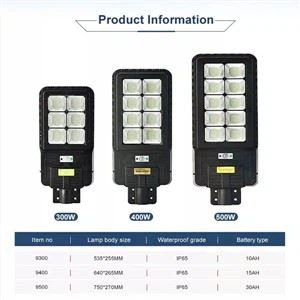
Uniform illumination is crucial for solar powered street lights, as it directly impacts safety and visibility on roadways and public spaces. As a dedicated supplier of solar powered street lights, we understand the significance of this aspect and are committed to ensuring that our products deliver consistent and high - quality lighting. In this blog, we will explore the various factors and technologies we employ to achieve uniform illumination.
1. Optimal Design of Solar Panels
The efficiency of solar panels is the foundation for adequate power supply to the street lights, which in turn is essential for uniform illumination. Our solar panels are designed with advanced photovoltaic technology. High - quality monocrystalline or polycrystalline silicon cells are used, which have excellent energy conversion rates. These panels are crafted to capture sunlight effectively throughout the day, even in low - light conditions.
The orientation and tilt angle of the solar panels are also carefully considered during installation. The angle is adjusted according to the geographical location of the installation site to maximize sunlight exposure. For example, in regions closer to the equator, the tilt angle is set relatively smaller, while in areas at higher latitudes, a larger tilt angle is preferred. This ensures that the solar panels can generate sufficient power to charge the batteries, providing a stable energy source for the street lights at night. The well - designed solar panel system guarantees that the lights have a continuous and reliable power supply, which is fundamental for maintaining uniform illumination over time.
2. High - Quality LED Lights
We use state - of - the - art LED lights in our solar powered street lights. LEDs have several advantages over traditional lighting sources such as incandescent and fluorescent lights. One of the key benefits is their high luminous efficacy. LEDs can convert a large proportion of electrical energy into visible light, resulting in brighter illumination with less power consumption.
Our LED lights are also designed to have a wide beam angle. A wider beam angle allows the light to spread over a larger area, reducing the occurrence of dark spots between lights. This is crucial for achieving uniform illumination along the street. Additionally, the color temperature of the LEDs is carefully selected to provide a natural and comfortable light environment. The right color temperature can enhance visibility and make it easier for people to see clearly at night.
For more details about our high - quality LED lighting solutions, you can check out our Solar LED Street Light.
3. Distribution of Lights
The layout and distribution of solar powered street lights play a vital role in ensuring uniform illumination. We conduct a thorough site survey before installation to determine the optimal spacing and height of the lights. Factors such as the width of the road, the surrounding environment (e.g., the presence of buildings or trees), and the desired level of illumination are taken into account.
In general, for a standard urban road, we ensure that the lights are evenly spaced to avoid excessive overlap or large gaps in illumination. The height of the light poles is also adjusted based on the width of the road. Higher poles are used for wider roads to provide a more uniform spread of light. This data - driven approach to light distribution helps us create a well - lit environment with consistent illumination levels.
4. Smart Control Systems
Our smart control systems are another important factor in achieving uniform illumination. These systems allow for precise control of the lighting intensity and timing. For instance, during hours with low traffic, the lights can be dimmed to a certain level while still maintaining a safe level of illumination. This not only saves energy but also helps to maintain a more consistent overall illumination along the street.
The smart control systems can also adjust the lighting based on the ambient light conditions. When the natural light starts to fade in the evening, the lights are automatically turned on, and they can adjust their brightness according to the actual need. During cloudy days or in areas with more shade, the system can increase the lighting intensity to ensure uniform illumination.
To learn more about our intelligent lighting solutions, visit our Smart Solar Street Light page.
5. Adjustable Angle Lighting
Our adjustable angle solar street lights offer an additional layer of flexibility in achieving uniform illumination. Different installation sites may have unique requirements due to the terrain or the presence of obstacles. With adjustable angle lights, the direction of the light beam can be easily adjusted to illuminate specific areas that need more attention.
For example, in a curved road or an area with uneven terrain, the angle of the lights can be changed to ensure that the entire area is evenly lit. This feature allows us to customize the lighting solution for each installation site, providing a more comprehensive and uniform illumination effect.
Explore our Adjustable Angle Solar Street Light for more information on this innovative product.
6. Regular Maintenance and Monitoring
Ensuring uniform illumination is not just about the initial installation; regular maintenance and monitoring are also essential. We provide comprehensive maintenance services to keep the solar powered street lights in optimal working condition. This includes cleaning the solar panels regularly to remove dust and debris, which can reduce the efficiency of sunlight absorption.


We also conduct regular checks on the batteries, LED lights, and control systems. If any component shows signs of malfunction or degradation, it is replaced promptly to maintain the lighting performance. Additionally, we use remote monitoring technology to keep track of the operation status of the lights in real - time. This allows us to detect and address any issues before they affect the illumination quality.
7. Quality Assurance and Testing
Before our solar powered street lights are released to the market, they undergo rigorous quality assurance and testing procedures. We test the illumination performance of the lights under various conditions, including different weather and ambient light levels. The tests measure parameters such as the luminous intensity, beam angle, and uniformity of illumination.
By passing these strict tests, we can ensure that our products meet the highest standards of uniform illumination. We also keep improving our products based on the test results and feedback from customers, continuously enhancing the lighting performance and reliability.
In conclusion, achieving uniform illumination for solar powered street lights requires a combination of advanced technology, careful design, and proper maintenance. As a supplier, we are dedicated to using the latest innovations and best practices to provide our customers with high - quality lighting solutions that ensure safe and well - lit environments.
If you are interested in our solar powered street lights or have any questions about achieving uniform illumination for your specific site, we welcome you to contact us for a procurement discussion. Our team of experts is ready to provide you with professional advice and customized solutions.
References
- Phillips, R. (2018). LED Lighting Technology: Principles and Applications. Springer.
- International Commission on Illumination (CIE). (2020). CIE Standards on Outdoor Lighting Design.
- DOE. (2021). Solar Energy Technologies Office: Advancements in Solar Power Systems.