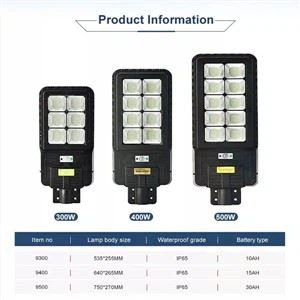
Hey there! I'm a supplier of 80w solar street lights, and I've been in this game for quite a while. One question that often pops up from customers is how the installation method, like pole - mounted or wall - mounted, affects the performance of an 80w solar street light. Well, let's dive right into it!
Pole - Mounted Solar Street Lights
Pole - mounted solar street lights are probably the most common type you'll see out there. They're often used along roads, in parking lots, and in large open areas. The first big advantage of pole - mounted lights is the height. When you mount a solar street light on a pole, it can reach a good height, usually anywhere from 3 to 10 meters. This height allows the light to cover a larger area. For an 80w solar street light, a higher pole means that the light can spread out over a wider radius, providing better illumination for larger spaces.


Another key benefit is the orientation of the solar panel. When mounted on a pole, it's easier to adjust the solar panel to face the sun at the optimal angle. This is super important because the amount of sunlight the panel can capture directly affects how much energy it can generate. An 80w solar panel needs as much sunlight as possible during the day to charge the battery fully. With a pole - mounted installation, you can tilt the panel to match the local solar path, which can significantly increase the charging efficiency.
However, pole - mounted lights also have some drawbacks. One of the main issues is the wind resistance. Since the light is up high on a pole, it's more exposed to the wind. Strong winds can put a lot of stress on the pole and the light fixture itself. If the pole isn't properly installed or is of poor quality, it could potentially bend or even break in extreme weather conditions. Also, the installation of a pole can be more complicated and time - consuming compared to other methods. You need to dig a hole, pour concrete, and ensure the pole is properly secured. This means higher installation costs and more labor.
Wall - Mounted Solar Street Lights
Wall - mounted solar street lights are a great option for smaller areas, like the entrances of buildings, alleys, or the sides of homes. The main advantage here is the simplicity of installation. You don't need to deal with digging holes or pouring concrete. All you need is a solid wall surface, and you can mount the light relatively quickly. This also means lower installation costs, which is a big plus for budget - conscious customers.
Wall - mounted lights are also more protected from the wind compared to pole - mounted ones. Since they're closer to the ground and attached to a wall, they're less likely to be affected by strong winds. This can lead to a longer lifespan for the light fixture and the solar panel.
But there are some limitations too. The height of a wall - mounted light is usually lower than that of a pole - mounted one. This means the light can't cover as large an area. For an 80w solar street light, the illumination radius will be more limited, and you might need to install multiple lights to cover a larger space. Additionally, the orientation of the solar panel can be more restricted. Walls often face in fixed directions, and you might not be able to adjust the panel to the optimal solar angle. This can result in less sunlight capture and reduced charging efficiency.
Other Installation Methods
There are also other installation methods like ground - mounted or bracket - mounted solar street lights. Ground - mounted lights are similar to pole - mounted ones in terms of illumination area, but they're closer to the ground. This can be useful in areas where a tall pole isn't practical, like in gardens or small yards. However, they're more prone to damage from animals or human activities.
Bracket - mounted lights are often used in industrial settings or on existing structures. They can be easily attached to brackets on buildings or other structures. The advantage is the flexibility of installation, but similar to wall - mounted lights, the orientation of the solar panel can be a challenge.
Impact on Performance
The installation method has a direct impact on the performance of an 80w solar street light. As we've discussed, the charging efficiency of the solar panel is crucial. A well - oriented solar panel can charge the battery faster and more effectively. If the installation method restricts the panel's orientation, the battery might not get fully charged, which means the light won't be able to operate at its full capacity during the night.
The illumination area is another important factor. Depending on where you need to use the light, you'll want to choose an installation method that can provide the best coverage. For example, if you're lighting up a large parking lot, a pole - mounted light is likely the better choice. But if you just need to light up a small pathway, a wall - mounted light might be sufficient.
The durability of the light is also affected by the installation method. Installation methods that expose the light to more external factors, like wind or physical damage, can reduce the lifespan of the light. You need to consider the local environment and weather conditions when choosing an installation method to ensure the light will last as long as possible.
Choosing the Right Installation Method
When choosing an installation method for your 80w solar street light, you need to consider several factors. First, think about the area you want to illuminate. If it's a large open space, a pole - mounted light is probably the way to go. But if it's a smaller area or a building entrance, a wall - mounted light might be more suitable.
The local weather conditions are also important. If you live in an area with strong winds, you might want to avoid pole - mounted lights or ensure that the pole is of high quality and properly installed. In areas with a lot of foot traffic or where there's a risk of physical damage, a wall - mounted or ground - mounted light might be safer.
Your budget is another crucial factor. As mentioned earlier, pole - mounted lights generally have higher installation costs due to the more complex installation process. If you're on a tight budget, a wall - mounted or bracket - mounted light could be a better option.
Related Resources
If you want to learn more about solar street lights, I've got some great resources for you. Check out this article on Far Apart Should Solar Street Light to understand how to space your lights for optimal illumination. You can also read about Solar Energy Split Street Lamp for more information on different types of solar street lights. And if you're interested in lithium - battery powered lights, have a look at Lithium Battery Solar Street Light.
Contact Us for Purchase
If you're in the market for an 80w solar street light and need help deciding on the right installation method, or if you have any other questions, don't hesitate to reach out. We're here to help you choose the best product for your needs. Whether it's for a commercial project or a residential area, we've got the expertise and the high - quality products to meet your requirements. Let's start a conversation and find the perfect solution for you!
References
- Solar Street Lighting Handbook, various authors
- Journal of Renewable Energy and Sustainable Development, multiple issues