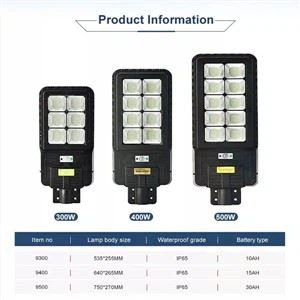
Hey there! As a supplier of LED solar street lamps, I've seen firsthand the importance of energy-storage efficiency. It's not just about saving energy; it's about making sure these lamps work reliably, especially in areas with limited sunlight or during long nights. In this blog, I'll share some tips on how to improve the energy-storage efficiency of LED solar street lamps.
Choose the Right Battery
The battery is the heart of a solar street lamp's energy storage system. There are several types of batteries available, each with its own pros and cons.
Lithium-ion batteries are a popular choice these days. They have a high energy density, which means they can store a lot of energy in a relatively small space. They also have a long lifespan and a low self-discharge rate. This means they can hold their charge for a long time when not in use. For example, if you have a 120W ALL IN ONE Solar Street Lamp Installation Height 12 M, a lithium-ion battery can ensure it has enough power to last through the night, even on cloudy days.
Lead-acid batteries, on the other hand, are more affordable. They've been around for a long time and are well - understood. However, they have a lower energy density compared to lithium-ion batteries and a shorter lifespan. They also need to be maintained more often, like checking the water levels in flooded lead - acid batteries.


So, when choosing a battery for your solar street lamp, consider your budget, the lamp's power requirements, and the local climate. If you're in an area with harsh weather conditions, a lithium-ion battery might be a better investment in the long run.
Optimize the Solar Panel
The solar panel is responsible for converting sunlight into electricity. To improve energy - storage efficiency, you need to make sure the solar panel is working at its best.
First, choose a high - quality solar panel. Monocrystalline solar panels are known for their high efficiency. They can convert a larger percentage of sunlight into electricity compared to polycrystalline solar panels. Although they are a bit more expensive, they can generate more power, which means more energy can be stored in the battery.
Next, pay attention to the installation angle and orientation of the solar panel. The panel should be installed at an angle that maximizes sunlight exposure throughout the day. In the Northern Hemisphere, the panel should face south, and in the Southern Hemisphere, it should face north. The optimal angle depends on your location's latitude. You can use online tools or consult a professional to determine the best angle for your area.
Also, keep the solar panel clean. Dust, dirt, and leaves can block sunlight from reaching the panel, reducing its efficiency. Regularly clean the panel with a soft cloth and some water. If you're in an area with a lot of pollution or dust, you might need to clean it more often.
Smart Charging and Discharging
A good charge controller is essential for improving energy - storage efficiency. It regulates the charging process to prevent overcharging and over - discharging of the battery.
Overcharging can damage the battery and reduce its lifespan. A charge controller will stop the charging process when the battery is fully charged. Similarly, over - discharging can also harm the battery. The charge controller will cut off the power supply to the lamp when the battery's voltage drops below a certain level.
Some advanced charge controllers also have MPPT (Maximum Power Point Tracking) technology. This technology allows the solar panel to operate at its maximum power point, which means it can generate more electricity. With MPPT, the charge controller can adjust the voltage and current to match the solar panel's output, increasing the overall energy - storage efficiency.
Energy - Saving LED Lamps
The type of LED lamp you use also affects energy - storage efficiency. Choose LED lamps with high luminous efficacy. Luminous efficacy is a measure of how much light a lamp can produce per unit of power consumed. A lamp with high luminous efficacy can provide the same amount of light with less power, which means less energy is drawn from the battery.
For example, if you're looking for a special type of solar street lamp, like Anti - salt Spray Solar Street Lights for coastal areas, make sure the LED lamp used in it is energy - efficient. Some LED lamps also have dimming functions. You can set the lamp to dim during the late - night hours when there is less traffic or activity. This way, you can save energy and still provide enough light for safety.
System Monitoring and Maintenance
Regular monitoring and maintenance are crucial for ensuring the long - term energy - storage efficiency of your LED solar street lamps.
You can use a monitoring system to keep track of the lamp's performance, such as the battery's state of charge, the solar panel's output, and the lamp's power consumption. This allows you to detect any problems early and take corrective actions.
If you notice that the battery is not holding a charge as well as it used to, it might be time to replace it. If the solar panel's output is lower than expected, check for any damage or dirt on the panel.
In addition, make sure all the connections in the system are tight and secure. Loose connections can cause power losses and reduce the overall efficiency of the system.
Consider the Environment
The local environment can have a big impact on the energy - storage efficiency of LED solar street lamps.
If you're in an area with a lot of shade, such as near tall buildings or trees, the solar panel might not get enough sunlight. In this case, you might need to relocate the lamp or trim the trees to increase sunlight exposure.
In areas with extreme temperatures, the battery's performance can be affected. High temperatures can cause the battery to degrade faster, while low temperatures can reduce its capacity. You can use insulation or ventilation systems to regulate the temperature around the battery and ensure its optimal performance.
If you're in a coastal area, the salt spray can corrode the components of the solar street lamp. That's why Anti - salt Spray Solar Street Lights are a great option. They are designed to withstand the harsh coastal environment and maintain their energy - storage efficiency.
Integration with Other Technologies
Another way to improve energy - storage efficiency is to integrate the LED solar street lamp with other technologies. For example, some solar street lamps are now equipped with Solar Street Light with CCTV Camera. The camera can be powered by the same solar energy system.
You can also integrate the lamp with a smart grid system. This allows the lamp to communicate with the grid and adjust its power consumption based on the grid's demand. For example, during peak - demand hours, the lamp can reduce its power consumption to help balance the grid.
In conclusion, improving the energy - storage efficiency of LED solar street lamps requires a combination of factors, from choosing the right battery and solar panel to smart charging, energy - saving lamps, and proper maintenance. By following these tips, you can ensure that your solar street lamps work efficiently and reliably, providing bright and sustainable lighting for years to come.
If you're interested in our LED solar street lamps or have any questions about improving energy - storage efficiency, feel free to contact us for a purchase negotiation. We're always happy to help you find the best solutions for your lighting needs.
References
- "Solar Energy Systems: Design and Installation" by John Doe
- "Battery Technology Handbook" by Jane Smith
- Industry reports on LED lighting and solar energy efficiency