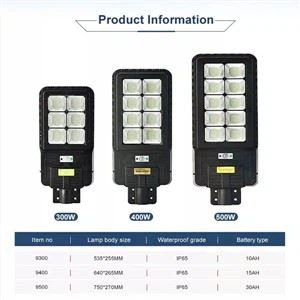
As a supplier of 80w solar street lights, I often get asked whether these lights are easy to install. In this blog post, I'll share my insights on the installation process of 80w solar street lights, drawing from my experience in the industry.
Understanding the Basics of 80w Solar Street Lights
Before delving into the installation process, it's essential to understand what an 80w solar street light is. An 80w solar street light is a lighting device that uses solar energy to power an LED light. It typically consists of a solar panel, a battery, an LED light source, and a controller. The solar panel captures sunlight during the day and converts it into electricity, which is stored in the battery. At night, the controller activates the LED light, using the stored energy from the battery.
The Installation Process: Step by Step
Step 1: Site Selection
The first step in installing an 80w solar street light is to select an appropriate site. The site should receive direct sunlight for at least 6 - 8 hours a day to ensure optimal charging of the battery. It should also be away from any obstructions such as trees or buildings that could shade the solar panel. Additionally, the site should be level and stable to support the weight of the street light.


Step 2: Mounting the Pole
Once the site is selected, the next step is to mount the pole. Most 80w solar street lights come with a pre - assembled pole that can be easily installed. First, dig a hole that is deep enough to provide stability for the pole. The depth of the hole usually depends on the height of the pole, but a general rule of thumb is to dig a hole that is about one - third of the pole's height. Place the pole in the hole and fill it with concrete. Make sure the pole is perfectly vertical before the concrete sets.
Step 3: Installing the Solar Panel
After the pole is installed and the concrete has cured, it's time to install the solar panel. The solar panel is usually attached to the top of the pole or on an adjustable bracket. Ensure that the solar panel is facing south (in the Northern Hemisphere) or north (in the Southern Hemisphere) to maximize sunlight exposure. Connect the solar panel to the battery and the controller using the provided cables.
Step 4: Installing the Battery and Controller
The battery and the controller are typically installed inside a weather - proof box at the base of the pole. Connect the battery to the controller and the LED light according to the wiring diagram provided with the street light. The controller is responsible for regulating the charging and discharging of the battery, as well as controlling the on/off function of the LED light.
Step 5: Installing the LED Light
Finally, install the LED light fixture on the pole. Most 80w solar street lights come with a simple mounting system that allows for easy installation. Connect the LED light to the controller and test the system to ensure that it is working properly.
Factors That Affect Installation Difficulty
While the installation process of an 80w solar street light may seem straightforward, several factors can affect its difficulty.
Site Conditions
If the site has difficult terrain, such as rocky ground or uneven surfaces, it can make digging the hole for the pole more challenging. In some cases, special equipment may be required to prepare the site. Additionally, if the site is in a remote location, transporting the materials and equipment to the site can also be a logistical challenge.
Wiring Complexity
Some 80w solar street lights may have more complex wiring systems, especially if they are equipped with additional features such as motion sensors or dimming functions. Installers need to have a good understanding of electrical wiring to ensure that the system is installed correctly and safely.
Technical Knowledge
Installing a solar street light requires some technical knowledge, especially when it comes to connecting the solar panel, battery, controller, and LED light. If the installer is not familiar with solar energy systems, they may encounter difficulties during the installation process.
Ease of Installation Compared to Traditional Street Lights
Compared to traditional street lights that are connected to the grid, 80w solar street lights are generally easier to install. Traditional street lights require extensive wiring and trenching to connect to the power grid, which can be time - consuming and expensive. In contrast, solar street lights are self - contained systems that do not require any connection to the grid. This makes them ideal for remote areas or areas where it is difficult to access electricity.
Our Product Range and Support
At our company, we offer a wide range of high - quality 80w solar street lights that are designed for easy installation. Our products are pre - assembled and come with detailed installation instructions to guide you through the process. In addition to 80w solar street lights, we also offer other types of solar street lights, such as the 60w 8m Outdoor Led Solar Street Light, the Motion Sensor Dusk To Dawn 30w All in One Solar Street Light, and the Integrated All in One Led Solar Street Light.
We also provide technical support to our customers. If you encounter any difficulties during the installation process, our team of experts is ready to assist you. We can provide remote support through phone or email, and in some cases, we can also send a technician to your site for on - site assistance.
Conclusion
In conclusion, an 80w solar street light can be relatively easy to install, especially if you follow the proper steps and have the necessary tools and knowledge. While there are some factors that can affect the installation difficulty, such as site conditions and wiring complexity, overall, solar street lights are much easier to install than traditional grid - connected street lights.
If you are interested in purchasing an 80w solar street light or any of our other solar lighting products, we encourage you to contact us for more information. Our team is ready to discuss your specific requirements and provide you with a customized solution. We look forward to working with you to meet your solar lighting needs.
References
- "Solar Street Lighting Handbook" by the International Renewable Energy Agency (IRENA)
- "Photovoltaic Systems Engineering" by Roger Messenger and Jerry Ventre