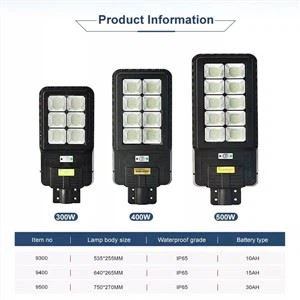
As a supplier of solar LED street lamps, I often get asked about the charging efficiency of these innovative lighting solutions. In this blog post, I'll delve into the factors that affect the charging efficiency of solar LED street lamps and provide insights to help you make informed decisions for your lighting projects.
Understanding Solar Charging Basics
Solar LED street lamps rely on photovoltaic (PV) panels to convert sunlight into electricity. The PV panels are made up of multiple solar cells, which are semiconductor devices that generate an electric current when exposed to sunlight. This direct current (DC) is then stored in a battery for later use, typically at night when the street lamp needs to illuminate.
The charging efficiency of a solar LED street lamp is essentially the ratio of the electrical energy stored in the battery to the solar energy received by the PV panels. It's influenced by a variety of factors, including the quality of the PV panels, the angle and orientation of the panels, the local solar irradiance, and the efficiency of the charge controller.
Quality of PV Panels
The quality of the PV panels is one of the most critical factors affecting charging efficiency. High - quality PV panels are made from superior semiconductor materials and have better manufacturing processes, which result in a higher conversion efficiency. For example, monocrystalline silicon PV panels generally have a higher efficiency compared to polycrystalline silicon panels. They can convert a larger percentage of the sunlight they receive into electricity, typically ranging from 18% to 22% for monocrystalline panels, while polycrystalline panels usually have an efficiency of around 15% to 18%.
When selecting solar LED street lamps, it's important to choose those equipped with high - quality PV panels. At our company, we offer street lamps with top - grade PV panels that ensure optimal charging efficiency. You can check out our 200w Solar Street Light, which is equipped with efficient PV panels to maximize charging and lighting performance.
Angle and Orientation of PV Panels
The angle and orientation of the PV panels play a significant role in determining the amount of sunlight they receive. PV panels should be installed at an angle that maximizes their exposure to the sun throughout the day. In general, the optimal tilt angle of the PV panels is approximately equal to the latitude of the installation location. For example, if the street lamp is installed at a latitude of 30 degrees north, the PV panels should be tilted at an angle of around 30 degrees.
The orientation of the PV panels is also crucial. In the Northern Hemisphere, PV panels should face south to receive the maximum amount of sunlight, while in the Southern Hemisphere, they should face north. Incorrect orientation or tilt can significantly reduce the amount of sunlight hitting the panels and thus lower the charging efficiency.
Local Solar Irradiance
Solar irradiance refers to the amount of solar power per unit area received on the Earth's surface. It varies depending on the geographical location, time of year, and weather conditions. Areas closer to the equator generally receive higher solar irradiance compared to areas at higher latitudes. For instance, regions in the desert areas of the southwestern United States or the deserts in the Middle East have high solar irradiance, which is ideal for solar LED street lamps.
Weather conditions also have a major impact on solar irradiance. Cloudy, rainy, or foggy days can reduce the amount of sunlight reaching the PV panels, thereby decreasing the charging efficiency. When planning a solar LED street lamp project, it's essential to consider the local solar irradiance data. Our team can assist you in analyzing the solar resources of your project location to ensure that the street lamps are properly sized and configured for optimal charging.
Efficiency of the Charge Controller
The charge controller is an important component in a solar LED street lamp system. Its main function is to regulate the charging process of the battery to prevent over - charging and over - discharging. A high - efficiency charge controller can maximize the amount of energy transferred from the PV panels to the battery.


There are two main types of charge controllers: Pulse Width Modulation (PWM) and Maximum Power Point Tracking (MPPT). MPPT charge controllers are more advanced and efficient than PWM charge controllers. They can continuously track the maximum power point of the PV panels and adjust the charging current and voltage accordingly, which can increase the charging efficiency by up to 30% compared to PWM charge controllers.
Battery Capacity and Type
The battery is another factor that can indirectly affect the charging efficiency. The capacity of the battery should be properly sized to store enough energy for the street lamp to operate during the night. If the battery capacity is too small, it may become fully charged quickly, and excess solar energy from the PV panels will be wasted. On the other hand, if the battery capacity is too large, it may not be fully charged, especially on days with low solar irradiance.
The type of battery also matters. Lead - acid batteries are commonly used in solar LED street lamps due to their relatively low cost. However, they have a lower energy density and a shorter lifespan compared to lithium - ion batteries. Lithium - ion batteries offer higher energy density, longer lifespan, and better charge - discharge efficiency, which can contribute to overall better performance of the solar LED street lamp system.
Maintenance and Long - Term Efficiency
Regular maintenance is essential to ensure the long - term charging efficiency of solar LED street lamps. The PV panels should be kept clean to remove dust, dirt, and debris that can block sunlight. A dirty PV panel can have significantly reduced charging efficiency. Additionally, the electrical connections in the system should be checked regularly to ensure there are no loose connections or corrosion, which can cause power losses.
Our company provides comprehensive maintenance guidelines and support to our customers. We also offer high - quality Solar Street Light Pole and Hot - dip Galvanized 9m Q235B Street Light Poles that are durable and designed to withstand various environmental conditions, ensuring the stability and long - term performance of the solar LED street lamp system.
Conclusion
The charging efficiency of a solar LED street lamp is influenced by multiple factors, including the quality of PV panels, angle and orientation, local solar irradiance, charge controller efficiency, battery capacity and type, and maintenance. By carefully considering these factors and choosing high - quality components, you can ensure that your solar LED street lamps have optimal charging efficiency and provide reliable lighting for your streets, parking lots, or other outdoor areas.
If you're interested in our solar LED street lamps or have any questions about charging efficiency and system design, we'd love to hear from you. Contact us today to start a discussion about your lighting project and explore how our products can meet your needs. We're committed to providing you with the best solar lighting solutions and excellent customer service.
References
- "Photovoltaic Systems and Solar Energy" by John A. Duffie and William A. Beckman.
- "Solar Power Engineering for Dummies" by Rik DeGunther.