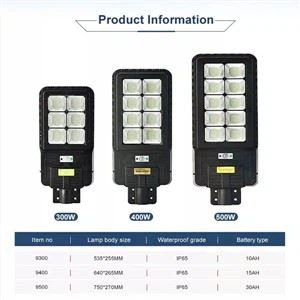
When it comes to solar street lights, one of the most critical components that significantly impacts their performance is the battery. Different battery chemistries offer distinct characteristics, which can lead to notable differences in the overall performance of solar street lights. As a solar street light supplier, I have in - depth knowledge and practical experience regarding these differences. In this blog, I'll explore the performance disparities among solar street lights equipped with different battery chemistries.
Lead - Acid Batteries
Lead - acid batteries are one of the oldest and most commonly used battery chemistries in solar street lights. They have been around for a long time, mainly due to their relatively low cost and wide availability.
Capacity and Discharge Performance
Lead - acid batteries typically have a large storage capacity, which allows solar street lights to store a significant amount of energy during the day for use at night. However, their discharge performance is somewhat limited. They are prone to self - discharge, which means that even when not in use, they lose energy over time. For solar street lights, this can be a drawback, especially in regions with long periods of cloudy weather. If the battery self - discharges too much, there may not be enough energy to power the lights at night.
Lifespan and Maintenance
The lifespan of lead - acid batteries is relatively short compared to some other chemistries. They usually last between 2 - 5 years, depending on usage and environmental conditions. Additionally, lead - acid batteries require regular maintenance. They need to be checked for water levels (in the case of flooded lead - acid batteries) and proper charging to ensure optimal performance. Failure to maintain them properly can lead to a reduced lifespan and decreased performance of the solar street lights.
Lithium - Ion Batteries
Lithium - ion batteries have gained popularity in recent years for use in solar street lights due to their advanced technology and superior performance in many aspects.


Capacity and Discharge Performance
Lithium - ion batteries have a high energy density, which means they can store a large amount of energy in a relatively small and lightweight package. This is a significant advantage for solar street lights, as it allows for more compact and efficient designs. Moreover, they have a low self - discharge rate, typically less than 5% per month. This ensures that the stored energy is retained for a longer time, providing more reliable power to the lights, even during extended periods of poor sunlight.
Lifespan and Maintenance
Lithium - ion batteries have a much longer lifespan compared to lead - acid batteries. They can last up to 10 - 15 years, reducing the need for frequent battery replacements. Additionally, they require very little maintenance. There is no need to check water levels or perform complex charging procedures. This makes them a more convenient and cost - effective option in the long run for solar street light installations.
Nickel - Metal Hydride (NiMH) Batteries
Nickel - Metal Hydride batteries are another option for solar street lights, offering a balance between the characteristics of lead - acid and lithium - ion batteries.
Capacity and Discharge Performance
NiMH batteries have a moderate energy density. They can store a reasonable amount of energy, which is suitable for most solar street light applications. Their self - discharge rate is higher than that of lithium - ion batteries but lower than lead - acid batteries. They can still provide a reliable power supply to the lights, but may require more careful planning in areas with inconsistent sunlight.
Lifespan and Maintenance
The lifespan of NiMH batteries is generally between 5 - 10 years. They require less maintenance than lead - acid batteries but more than lithium - ion batteries. They may need occasional equalization charging to ensure uniform cell performance. However, overall, they are a relatively reliable option for solar street lights, especially for those on a budget who still want better performance than lead - acid batteries.
Impact on Solar Street Light Performance
The choice of battery chemistry can have a profound impact on various aspects of solar street light performance.
Lighting Duration
As mentioned earlier, the self - discharge rate and energy storage capacity of different batteries directly affect the lighting duration. Lithium - ion batteries, with their low self - discharge and high energy density, can provide longer lighting durations, ensuring that the streets are well - lit throughout the night. In contrast, lead - acid batteries may struggle to maintain long - term lighting, especially in adverse conditions.
Resistance to Environmental Conditions
Different battery chemistries also vary in their resistance to environmental conditions. Lithium - ion batteries can operate effectively in a wide range of temperatures, from - 20°C to 60°C. This makes them suitable for installation in diverse climates. Lead - acid batteries, on the other hand, are more sensitive to temperature changes. Extreme cold can reduce their capacity, while high temperatures can accelerate their degradation.
Cost - Effectiveness
When considering cost - effectiveness, it's important to look at both the upfront cost and the long - term cost. Lead - acid batteries have a lower upfront cost, but their short lifespan and high maintenance requirements can make them more expensive in the long run. Lithium - ion batteries have a higher upfront cost but offer a longer lifespan and lower maintenance, resulting in lower overall costs over time. NiMH batteries offer a middle - ground solution in terms of cost - effectiveness.
Our Offerings
At our company, we understand the importance of choosing the right battery chemistry for solar street lights. We offer a wide range of solar street lights with different battery chemistries to meet the diverse needs of our customers. Whether you are looking for a cost - effective solution with lead - acid batteries or a high - performance option with lithium - ion batteries, we have the perfect product for you.
We also provide Anti - salt Spray Solar Street Lights, which are designed to withstand harsh coastal environments. These lights are equipped with advanced corrosion - resistant materials and high - quality batteries to ensure long - term performance.
If you are new to solar street lights and need guidance on how to purchase and use them, we have a comprehensive guide available at How To Purchase And Use Solar Street Light. This guide will help you make an informed decision and ensure that you get the most out of your solar street light investment.
And of course, we have a variety of Solar Street Lights For Sale at competitive prices. Our team of experts is always ready to assist you in choosing the right product for your specific requirements.
Conclusion
In conclusion, the choice of battery chemistry has a significant impact on the performance of solar street lights. Each battery chemistry has its own advantages and disadvantages, and the decision should be based on factors such as budget, location, and desired performance. As a solar street light supplier, we are committed to providing high - quality products with the best battery options to meet the needs of our customers.
If you are interested in purchasing solar street lights or have any questions about the different battery chemistries, please don't hesitate to contact us. We look forward to discussing your requirements and helping you find the perfect solar street light solution for your project.
References
- "Battery Technologies for Renewable Energy Storage" by X. Zhang, et al.
- "Solar Street Lighting Systems: Design and Performance Analysis" by Y. Wang.
- Industry reports on solar energy storage and battery technologies.