


As a supplier of LED solar street lamps, I've witnessed firsthand the transformative power of these eco - friendly lighting solutions in illuminating streets, parks, and pathways. However, one factor that often comes into play, especially in areas prone to high - velocity winds, is the impact of strong winds on the stability of these lamps. In this blog, I'll delve into the various aspects of how strong winds can affect the stability of LED solar street lamps and what measures we, as suppliers, take to ensure their reliability.
Understanding the Forces at Play
When strong winds blow, they exert a significant amount of force on any object in their path, including LED solar street lamps. The force exerted by the wind can be calculated using the formula (F = 0.5\times\rho\times v^{2}\times C_{d}\times A), where (\rho) is the air density, (v) is the wind velocity, (C_{d}) is the drag coefficient, and (A) is the cross - sectional area of the object facing the wind.
For LED solar street lamps, the solar panel, the lamp housing, and the pole are the main components that are exposed to the wind. The solar panel, with its relatively large surface area, can act like a sail, catching the wind and creating a moment of force that tries to topple the lamp. The lamp housing, especially if it has a non - aerodynamic shape, can also contribute to the drag force. And the pole, which supports the entire structure, must be strong enough to withstand the lateral forces exerted by the wind.
Structural Integrity of the Pole
The pole is the backbone of an LED solar street lamp. It must be designed to support the weight of the solar panel, the lamp, and any associated components, as well as resist the forces generated by the wind. The material of the pole plays a crucial role in its strength. Common materials used for poles include steel, aluminum, and fiberglass.
Steel poles are known for their high strength and durability. They can withstand large amounts of stress and are often used in areas with high wind loads. Aluminum poles, on the other hand, are lighter and more corrosion - resistant, but they may require additional reinforcement in extremely windy conditions. Fiberglass poles are lightweight and have good electrical insulation properties, but they may not be as strong as steel or aluminum poles.
The diameter, thickness, and height of the pole also affect its stability. A wider and thicker pole will generally be more stable than a thinner one. Additionally, the height of the pole can increase the moment of force exerted by the wind. For example, a taller pole will experience a greater lateral force at the top, which can make it more prone to bending or toppling.
Mounting of the Solar Panel and Lamp
The way the solar panel and the lamp are mounted on the pole can also impact the stability of the LED solar street lamp. A proper mounting system should ensure that these components are securely attached to the pole and that they can withstand the forces generated by the wind.
The solar panel is typically mounted at an angle to maximize sunlight exposure. However, this angle can also increase the wind resistance. To counteract this, some mounting systems are designed to be adjustable, allowing the angle of the solar panel to be changed depending on the wind conditions. This can help reduce the drag force and improve the stability of the lamp.
The lamp housing should be mounted in a way that minimizes its exposure to the wind. Some lamp housings are designed with a streamlined shape to reduce drag. Additionally, the mounting brackets should be strong enough to hold the lamp firmly in place, even in high - wind situations.
Aerodynamic Design
Aerodynamic design is an important consideration in the development of LED solar street lamps. By reducing the drag coefficient of the components, the overall wind resistance of the lamp can be decreased. This can be achieved through various design features.
For the solar panel, a curved or sloped design can help the wind flow over it more smoothly, reducing the drag force. Some solar panels are also designed with a textured surface, which can disrupt the airflow and reduce the formation of turbulent eddies.
The lamp housing can be designed with a rounded or tapered shape to minimize the wind resistance. Additionally, vents or louvers can be incorporated into the design to allow the wind to pass through the housing, reducing the pressure build - up inside.
Impact on Electrical Components
Strong winds can also have an impact on the electrical components of an LED solar street lamp. The vibrations caused by the wind can loosen electrical connections, leading to intermittent or complete loss of power. The wind can also carry debris, such as branches or dust, which can damage the solar panel or the lamp.
To protect the electrical components, we use high - quality waterproof and dust - proof enclosures. For example, our IP65 Outdoor Led Lights are designed to be resistant to water and dust ingress, ensuring the reliability of the electrical components even in harsh environmental conditions.
Testing and Certification
Before our LED solar street lamps are released to the market, they undergo rigorous testing to ensure their stability in high - wind conditions. We conduct wind tunnel tests to simulate different wind speeds and directions and measure the forces exerted on the lamp. This allows us to optimize the design of the lamp and make any necessary adjustments to improve its stability.

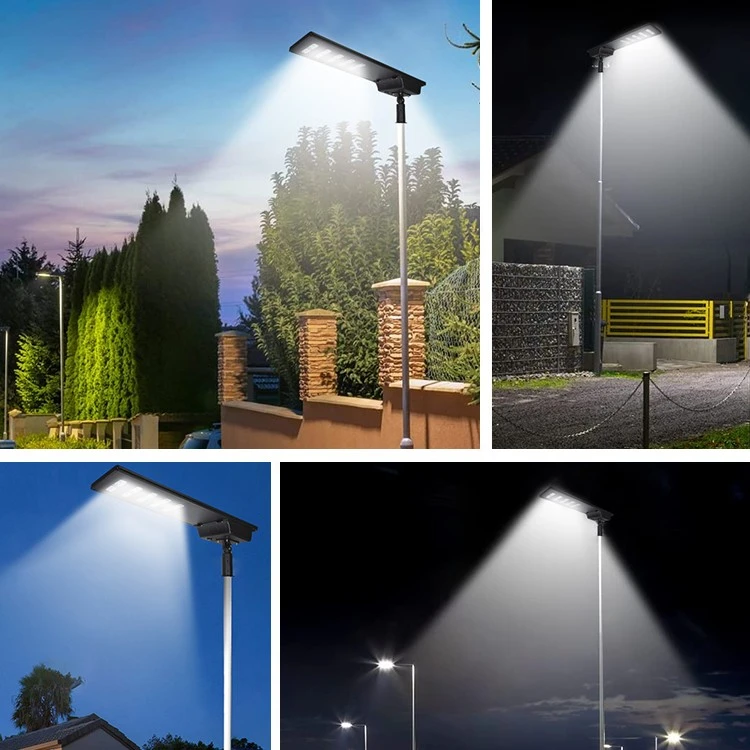
In addition to wind tunnel tests, our lamps also comply with various international standards and certifications, such as the IEC (International Electrotechnical Commission) standards. These standards ensure that the lamps are safe, reliable, and can withstand the forces generated by the wind.
Types of LED Solar Street Lamps and Their Wind Resistance
We offer a variety of LED solar street lamps, each with its own unique features and wind - resistance capabilities. Our Double Arm Solar Street Light is designed to provide wider illumination coverage. The double - arm design can be more stable than a single - arm design in some cases, as it distributes the weight and the wind forces more evenly.
Our LED Solar Street Light With Battery is another popular option. The battery is usually housed in a protective enclosure, which can also add some weight to the base of the lamp, improving its stability.
Conclusion
The impact of strong winds on the stability of LED solar street lamps is a complex issue that involves various factors, including the structural integrity of the pole, the mounting of the components, the aerodynamic design, and the protection of the electrical components. As a supplier, we are committed to providing high - quality LED solar street lamps that can withstand the forces generated by the wind.
If you are in the market for LED solar street lamps and are concerned about their stability in windy conditions, we invite you to contact us for a detailed discussion. Our team of experts can help you choose the right lamp for your specific needs and ensure that it is installed correctly to maximize its stability. Whether you are lighting up a small residential street or a large commercial area, we have the solutions to meet your requirements.
References
- "Wind Engineering for Structural Design" by Alan G. Davenport
- "Solar Energy Systems and Applications" by John A. Duffie and William A. Beckman
- International Electrotechnical Commission (IEC) standards on lighting equipment



