


What is the influence of panel orientation on outdoor solar street light charging?
As a dedicated supplier of outdoor solar street lights, I've witnessed firsthand the pivotal role that panel orientation plays in the charging efficiency and overall performance of these sustainable lighting solutions. In this blog, I'll delve into the science behind panel orientation, its impact on solar street light charging, and how you can optimize it for maximum energy harvest.
The Science of Solar Panel Orientation
Solar panels generate electricity by converting sunlight into direct current (DC) through the photovoltaic effect. The amount of sunlight a panel receives directly affects its power output. Therefore, the orientation of the solar panel in relation to the sun is crucial for maximizing energy production.
In the Northern Hemisphere, solar panels should generally face south to receive the most sunlight throughout the day. This is because the sun follows a path from the east to the west, passing through the southern part of the sky. By facing south, the panels can capture the maximum amount of sunlight during peak hours.
In the Southern Hemisphere, the opposite is true. Solar panels should face north to optimize sunlight exposure. The angle of the panels also matters. The optimal tilt angle is usually equal to the latitude of the location, adjusted slightly depending on the season. This angle ensures that the panels are perpendicular to the sun's rays for most of the day, maximizing the amount of sunlight they receive.
Impact of Panel Orientation on Outdoor Solar Street Light Charging
The orientation of the solar panel on an outdoor solar street light has a direct impact on its charging ability. A correctly oriented panel can charge the battery fully during the day, providing sufficient power to illuminate the street light throughout the night. On the other hand, a poorly oriented panel may not receive enough sunlight, resulting in incomplete charging and reduced lighting performance.
-
Reduced Charging Efficiency
If the solar panel is not facing the correct direction, it will receive less sunlight, which means less energy is converted into electricity. This can lead to a slower charging rate and may not fully charge the battery, especially on cloudy days or during the winter months when sunlight is limited. -
Shortened Lighting Duration
Insufficient charging due to improper panel orientation can result in a shorter lighting duration. The street light may not be able to stay illuminated for the desired number of hours, leaving the area dark and potentially compromising safety. -
Battery Degradation
Repeatedly undercharging the battery can also lead to premature battery degradation. Batteries are designed to be charged and discharged within a certain range. When they are not fully charged, it can cause stress on the battery cells, reducing their lifespan and overall performance.
Optimizing Panel Orientation for Outdoor Solar Street Lights
To ensure optimal charging and performance of outdoor solar street lights, it's essential to pay attention to panel orientation during installation. Here are some tips to help you get it right:
-
Conduct a Site Survey
Before installing the solar street lights, conduct a thorough site survey to determine the best orientation for the solar panels. Consider the location's latitude, the presence of any obstructions such as buildings or trees that may shade the panels, and the local weather patterns. -
Use a Solar Compass
A solar compass can be a useful tool for determining the correct orientation of the solar panels. It takes into account the sun's position throughout the day and provides an accurate reading of the optimal direction for maximum sunlight exposure. -
Adjust the Tilt Angle
As mentioned earlier, the tilt angle of the solar panels should be adjusted based on the latitude of the location. You can use a tilt angle calculator to determine the ideal angle for your area. Additionally, consider adjusting the tilt angle seasonally to account for changes in the sun's position. -
Monitor and Maintain
Once the solar street lights are installed, regularly monitor their performance to ensure that the panels are still correctly oriented. Over time, factors such as wind, rain, or human interference may cause the panels to shift. Make any necessary adjustments promptly to maintain optimal charging efficiency.
Our Product Recommendations
At our company, we offer a range of high-quality outdoor solar street lights designed to provide reliable and efficient lighting solutions. Here are some of our popular products:
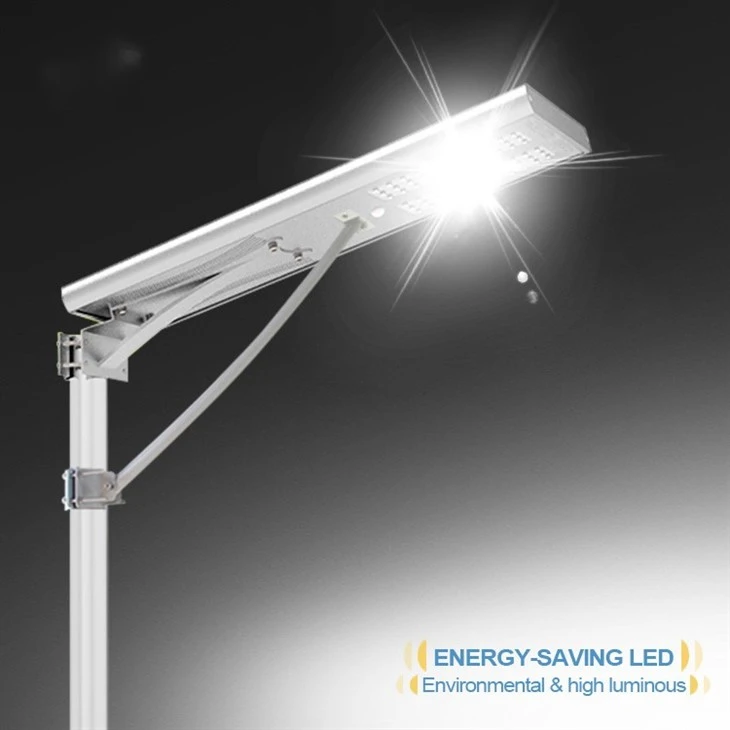
- Solar Street Light with Pole And Battery: This all-in-one solar street light comes with a built-in pole and battery, making it easy to install and use. It features a high-efficiency solar panel and a long-lasting battery, ensuring reliable performance even in challenging environments.
- 100W Solar Panel 64Ah Lithium Battery: This powerful combination of a 100W solar panel and a 64Ah lithium battery provides ample energy storage for extended lighting duration. The lithium battery offers faster charging, longer lifespan, and better performance in cold weather compared to traditional lead-acid batteries.
- 60 Watt Solar Street Light: Ideal for residential and commercial areas, this 60-watt solar street light provides bright and uniform illumination. It is equipped with a high-quality solar panel and a smart controller to optimize charging and lighting performance.
Conclusion
Panel orientation is a critical factor in the charging efficiency and performance of outdoor solar street lights. By understanding the science behind solar panel orientation and taking the necessary steps to optimize it, you can ensure that your solar street lights provide reliable and efficient lighting for years to come.
If you're interested in learning more about our outdoor solar street lights or have any questions about panel orientation and installation, please don't hesitate to contact us. Our team of experts is ready to assist you in finding the right solution for your needs. Let's work together to create a brighter and more sustainable future with solar energy.

References
- Duffie, J. A., & Beckman, W. A. (2013). Solar Engineering of Thermal Processes. John Wiley & Sons.
- Chow, T. T. (2010). Solar Energy Engineering: Processes and Systems. John Wiley & Sons.
- Soteris A. Kalogirou. (2009). Solar Energy Engineering and Technology. Elsevier.



