What is the installation distance between two solar street lamps?
As a leading solar street lamp supplier, we often receive inquiries from customers regarding the optimal installation distance between two solar street lamps. This is a crucial aspect of any solar street lighting project, as it directly impacts the lighting quality, energy efficiency, and overall cost - effectiveness of the system. In this blog post, we will delve into the factors that influence the installation distance and provide some guidelines to help you make an informed decision.
Factors Affecting the Installation Distance
1. Lamp Power
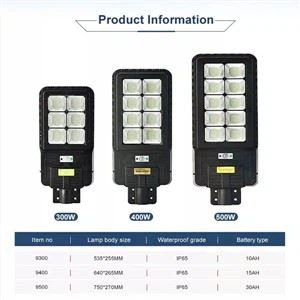
The power of the solar street lamp is one of the primary factors that determine the installation distance. Higher - power lamps generally have a greater illumination range, allowing for a larger distance between them. For instance, our 30 Watt Solar Street Lamp Installation Height Of 6 Meters is suitable for areas where a moderate level of lighting is required, and the installation distance might be relatively shorter compared to more powerful lamps. On the other hand, our IP65 Outdoor 60W Solar Street Lamps can cover a larger area, enabling a greater distance between each unit.


2. Installation Height
The height at which the solar street lamps are installed also plays a significant role. The higher the lamp is installed, the wider the area it can illuminate. A general rule of thumb is that for every increase in installation height, the illumination area increases, and thus the distance between the lamps can be increased. For example, if the lamps are installed at a height of 6 meters, the installation distance will be different from when they are installed at 8 meters.
3. Lighting Requirements
The specific lighting requirements of the area also affect the installation distance. Different applications, such as residential streets, industrial areas, or public parks, have different lighting standards. For example, a residential street may require a more evenly distributed and softer light, which may result in a shorter installation distance between the lamps. In contrast, an industrial area may need high - intensity lighting over a large area, allowing for a greater distance between the lamps.
4. Surrounding Environment
The surrounding environment can have a considerable impact on the installation distance. If the area has a lot of obstacles, such as trees or buildings, that can block the light, the installation distance may need to be reduced to ensure adequate lighting. Additionally, the reflectivity of the ground and surrounding surfaces also matters. A light - colored and highly reflective surface will require less light, potentially allowing for a greater distance between the lamps.
Calculating the Installation Distance
To calculate the installation distance, we can use some basic lighting principles. First, we need to determine the illumination level required for the area. This can be found in relevant lighting standards and codes. Once we know the required illumination level, we can use the lamp's luminous intensity distribution curve, which is usually provided by the manufacturer.
Let's assume we are using our Solar Up And Down Lights. These lights have a unique lighting pattern that needs to be considered when calculating the installation distance. We can start by measuring the area that needs to be illuminated and then estimate the number of lamps required based on the lamp's light output and the required illumination level.
For example, if the required illumination level for a residential street is 10 lux, and our lamp has a luminous intensity of 1000 candelas at a certain angle, we can use the inverse - square law of light to calculate the distance at which the lamp can provide the required illumination. The inverse - square law states that the illuminance (E) is inversely proportional to the square of the distance (d) from the light source, i.e., (E=\frac{I}{d^{2}}), where (I) is the luminous intensity.
After calculating the distance at which a single lamp can provide the required illumination, we need to consider the overlap between the light patterns of adjacent lamps. A certain amount of overlap is necessary to ensure uniform lighting and avoid dark spots. Usually, an overlap of 30% - 50% is recommended.
General Guidelines
Based on our experience as a solar street lamp supplier, here are some general guidelines for the installation distance:
- Low - power lamps (up to 30W): When installed at a height of 4 - 6 meters, the installation distance can be around 8 - 12 meters for areas with moderate lighting requirements, such as small alleys or pedestrian paths.
- Medium - power lamps (30W - 60W): At a height of 6 - 8 meters, the installation distance can be 12 - 18 meters for residential streets and public areas.
- High - power lamps (above 60W): Installed at a height of 8 - 10 meters, the installation distance can be 18 - 25 meters for industrial areas and large roads.
It's important to note that these are just rough estimates, and the actual installation distance should be adjusted according to the specific conditions of each project.
Importance of Correct Installation Distance
Installing solar street lamps at the correct distance is crucial for several reasons. Firstly, it ensures optimal lighting quality. Uniform lighting without dark spots or excessive brightness variations enhances safety and comfort for pedestrians and drivers. Secondly, it improves energy efficiency. If the lamps are installed too close together, it will result in over - lighting, wasting energy. Conversely, if the distance is too large, the area may not be adequately lit, which can also be a safety hazard.
Finally, correct installation distance can save costs. By using the right number of lamps and installing them at the appropriate distance, we can avoid unnecessary expenses on additional lamps and installation.
Contact Us for More Information
If you are planning a solar street lighting project and need more information on the installation distance or any other aspects of our solar street lamps, we are here to help. Our team of experts can provide you with detailed technical support and customized solutions based on your specific requirements. Whether you are a contractor, an architect, or a property owner, we can assist you in making the best decisions for your project.
Don't hesitate to reach out to us for more details on our products and services. We look forward to working with you to create a sustainable and well - lit environment.
References
- Lighting Handbook: Reference and Application, Illuminating Engineering Society of North America.
- Solar Lighting Design and Installation Guide, International Solar Energy Society.