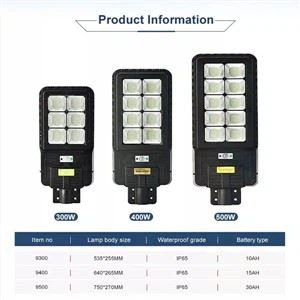
The lifespan of solar street lights is a crucial consideration for both suppliers and customers. As a solar street light supplier, I understand the importance of providing reliable and long - lasting products. In this blog, I will delve into the factors that influence the lifespan of solar street lights and offer insights into how to maximize their longevity.
Components of Solar Street Lights and Their Lifespans
Solar street lights are composed of several key components, each with its own expected lifespan.


Solar Panels
Solar panels are the heart of solar street lights, responsible for converting sunlight into electricity. High - quality solar panels can last between 25 - 30 years. This long lifespan is due to their relatively simple and durable design. They are made of photovoltaic cells that are encapsulated in a protective layer, usually glass and a polymer backsheet. However, their efficiency may gradually decline over time. On average, solar panels lose about 0.5% - 1% of their efficiency per year. This means that after 25 years, a solar panel might still be operating at around 75% - 95% of its original efficiency.
Batteries
Batteries are used to store the electricity generated by the solar panels for use during the night. The lifespan of batteries in solar street lights varies widely depending on the type of battery.
- Lead - Acid Batteries: These are the most traditional type of batteries used in solar street lights. They typically have a lifespan of 3 - 5 years. Lead - acid batteries are relatively inexpensive but require regular maintenance, such as checking the electrolyte levels. They are also sensitive to over - charging and deep - discharging, which can significantly reduce their lifespan.
- Lithium - Ion Batteries: Lithium - ion batteries are becoming increasingly popular in solar street lights due to their longer lifespan, usually 5 - 10 years. They have a higher energy density, which means they can store more energy in a smaller space. They are also more resistant to over - charging and deep - discharging compared to lead - acid batteries. Additionally, lithium - ion batteries have a lower self - discharge rate, which helps to preserve the stored energy.
LED Lights
LED lights are the lighting source of solar street lights. They have a very long lifespan, typically 50,000 - 100,000 hours. This means that if an LED light is used for 10 hours per day, it can last between 13.7 - 27.4 years. LED lights are energy - efficient and have a high luminous efficacy, which means they can produce more light with less energy. They are also more durable than traditional lighting sources, such as incandescent or fluorescent lights, as they are solid - state devices and are less prone to damage from vibrations or shocks.
Controller and Sensor
The controller is responsible for regulating the charging and discharging of the battery, as well as controlling the operation of the LED light. The sensor is used to detect the level of sunlight and turn the light on and off accordingly. These components usually have a lifespan of 5 - 10 years. They are relatively simple electronic devices, but their performance can be affected by environmental factors such as temperature and humidity.
Factors Affecting the Lifespan of Solar Street Lights
Environmental Conditions
- Temperature: Extreme temperatures can have a significant impact on the lifespan of solar street lights. High temperatures can accelerate the chemical reactions in the battery, leading to a shorter lifespan. For example, in hot climates, the lifespan of lead - acid batteries can be reduced by up to 50%. On the other hand, low temperatures can reduce the performance of the battery and the efficiency of the solar panels.
- Humidity: High humidity can cause corrosion of the electrical components in the solar street light, such as the controller and the wiring. This can lead to malfunctions and a shorter lifespan. In coastal areas or regions with high rainfall, it is important to use solar street lights with good waterproofing and corrosion - resistant materials.
- Dust and Pollution: Dust and pollution can accumulate on the surface of the solar panels, reducing their efficiency. If the solar panels are not cleaned regularly, the reduction in efficiency can become significant over time. In industrial areas or areas with high levels of dust, it may be necessary to clean the solar panels more frequently.
Installation and Maintenance
- Installation: Proper installation is crucial for the long - term performance of solar street lights. The solar panels should be installed at the correct angle and orientation to maximize sunlight exposure. The batteries should be installed in a well - ventilated area to prevent overheating. If the solar street lights are not installed correctly, it can lead to premature failure of the components.
- Maintenance: Regular maintenance can significantly extend the lifespan of solar street lights. This includes cleaning the solar panels, checking the battery voltage and electrolyte levels (for lead - acid batteries), and inspecting the wiring and connections for any signs of damage. For more information on high - quality solar street light components, you can visit High Bright Solar LED Light.
Maximizing the Lifespan of Solar Street Lights
Selecting High - Quality Components
As a solar street light supplier, I always recommend using high - quality components in solar street lights. High - quality solar panels, batteries, LED lights, controllers, and sensors are more reliable and have a longer lifespan. Although they may be more expensive upfront, they can save money in the long run by reducing the need for frequent replacements.
Proper Sizing and Design
The solar street light should be properly sized and designed according to the specific requirements of the installation site. This includes considering the amount of sunlight available, the required lighting level, and the length of the night. For example, in areas with less sunlight, larger solar panels and higher - capacity batteries may be required. You can find suitable products like 120W ALL IN ONE Solar Street Lamp Installation Height 12 M for different installation needs.
Regular Monitoring and Maintenance
Establishing a regular monitoring and maintenance schedule is essential for maximizing the lifespan of solar street lights. This can help to detect and address any potential problems early, before they cause significant damage. For example, if the battery voltage is found to be low during a regular check, it may indicate a problem with the charging system or the battery itself.
Conclusion
The lifespan of solar street lights is influenced by a variety of factors, including the quality of the components, the environmental conditions, and the installation and maintenance practices. By understanding these factors and taking appropriate measures, it is possible to extend the lifespan of solar street lights and ensure their reliable performance over the long term.
As a solar street light supplier, I am committed to providing high - quality products and professional advice to our customers. If you are interested in purchasing solar street lights or need more information about their lifespan and maintenance, please feel free to contact us for a detailed discussion and procurement negotiation. We can help you select the most suitable solar street lights for your specific needs and ensure that they are installed and maintained properly. You can also explore our Solar Street Light Poles for a complete solar street light solution.
References
- "Solar Photovoltaic Systems: Design and Installation" by Peter Hacker
- "Battery Technology Handbook" by Thomas B. Reddy
- "LED Lighting Technology: Principles and Applications" by Roland Haitz