Luminous flux is a crucial parameter when it comes to solar street lamps. As a reputable solar street lamp supplier, I am often asked about what the luminous flux of a solar street lamp is and why it matters. In this blog post, I'll delve into the concept of luminous flux, its significance in solar street lighting, and how it relates to our product offerings.
Understanding Luminous Flux
Luminous flux, measured in lumens (lm), is a measure of the total amount of visible light emitted by a light source per unit of time. It gives an indication of the overall brightness of a light source as perceived by the human eye. Unlike radiant flux, which measures the total power of electromagnetic radiation emitted by a source, luminous flux takes into account the sensitivity of the human eye to different wavelengths of light.
The human eye is most sensitive to light in the green - yellow part of the spectrum, around 555 nanometers. So, when calculating luminous flux, light sources with wavelengths closer to this peak sensitivity contribute more to the overall lumen value. For example, a light source that emits a lot of light in the infrared or ultraviolet range, which are not visible to the human eye, will have a lower luminous flux compared to a source that emits a similar amount of power in the visible range.
Why Luminous Flux Matters in Solar Street Lamps
When it comes to solar street lamps, luminous flux is of utmost importance for several reasons. Firstly, it directly affects the visibility and safety on the streets. Adequate luminous flux ensures that pedestrians can clearly see the path ahead, obstacles on the road, and any potential hazards. For drivers, sufficient street lighting with appropriate luminous flux helps in better visibility of road signs, lane markings, and other vehicles.
Secondly, luminous flux plays a role in energy efficiency. By choosing solar street lamps with the right luminous flux for a particular area, we can avoid over - lighting or under - lighting. Over - lighting not only wastes energy but can also cause light pollution, which has negative impacts on wildlife, astronomy, and human health. On the other hand, under - lighting can compromise safety.


Factors Affecting the Luminous Flux of Solar Street Lamps
Several factors influence the luminous flux of solar street lamps.
Light Source
The type of light source used in the solar street lamp is a major determinant of its luminous flux. LED (Light - Emitting Diode) is the most commonly used light source in modern solar street lamps due to its high luminous efficacy. Luminous efficacy is the ratio of luminous flux to power consumption, measured in lumens per watt (lm/W). LEDs can have a luminous efficacy of up to 200 lm/W or more, which means they can produce a high amount of light with relatively low power consumption.
In contrast, traditional incandescent bulbs have a very low luminous efficacy, typically around 10 - 17 lm/W. This means that for the same power input, an LED solar street lamp can produce much more light (higher luminous flux) than an incandescent - based solar street lamp.
Solar Panel Efficiency
The efficiency of the solar panel in a solar street lamp system also affects the luminous flux. A more efficient solar panel can convert more sunlight into electricity. This allows the battery in the solar street lamp to store more energy during the day, which can then be used to power the light source at night. If the battery is fully charged, the light source can operate at its maximum capacity, resulting in the full luminous flux output.
Battery Capacity
The capacity of the battery in the solar street lamp is another factor. A larger - capacity battery can store more energy. This is important because it ensures that the light source can maintain a consistent luminous flux throughout the night, even on days when there is less sunlight or during longer nights. If the battery capacity is too small, the light may dim or turn off prematurely, reducing the effective luminous flux.
Our Solar Street Lamp Product Range and Luminous Flux
As a solar street lamp supplier, we offer a wide range of products with different luminous flux values to meet the diverse needs of our customers.
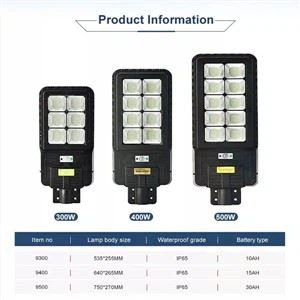
Our Solar Street Light with Solar Panel is designed for various applications, from residential streets to commercial areas. These lamps are equipped with high - efficiency LEDs that can provide a luminous flux ranging from 3000 lm to 10000 lm, depending on the model. The higher - lumen models are suitable for areas with high traffic or where more illumination is required, such as intersections and parking lots.
Our LED Street Lighting Goes Solar series focuses on energy - efficient solutions. These lamps are engineered to maximize the luminous flux while minimizing power consumption. With advanced LED technology and optimized solar panel and battery systems, they can achieve a high luminous flux with a relatively low power input, making them an ideal choice for sustainable street lighting projects.
For smaller areas such as gardens and alleys, we offer the LED Solar Integrated Garden Light. These lights have a lower luminous flux, typically in the range of 500 lm to 2000 lm. They are designed to provide a soft, ambient light that enhances the aesthetics of the garden while still ensuring basic visibility.
Choosing the Right Luminous Flux for Your Project
When selecting a solar street lamp, it's important to choose the right luminous flux for your specific project. Here are some guidelines to help you make an informed decision:
Consider the Area
For large, open areas such as highways and main roads, you'll need solar street lamps with a high luminous flux, typically 8000 lm or more. For residential streets and sidewalks, a luminous flux of 3000 - 6000 lm may be sufficient. Smaller areas like alleys and gardens can get by with 500 - 2000 lm.
Traffic Volume
Areas with high traffic volume, whether it's pedestrian or vehicular, require more light. Higher luminous flux ensures better visibility, which is crucial for safety. In contrast, areas with low traffic can have lower - lumen solar street lamps.
Surrounding Environment
If the area is surrounded by a lot of natural light, such as near a body of water that reflects light, you may be able to get away with a lower luminous flux. On the other hand, if the area is in a densely built - up area with tall buildings that block light, you'll need a higher luminous flux.
Conclusion
Luminous flux is a key factor in the performance of solar street lamps. It determines the brightness of the light, which in turn affects visibility, safety, and energy efficiency. As a solar street lamp supplier, we understand the importance of providing products with the right luminous flux for different applications.
Whether you're looking for a high - lumen solar street lamp for a busy commercial area or a lower - lumen light for a garden, we have a solution for you. If you're interested in learning more about our products or have a specific project in mind, we'd love to hear from you. Contact us to start a conversation about your solar street lighting needs and let's work together to find the perfect solution for your project.
References
- "Lighting Handbook: Reference and Application", Illuminating Engineering Society (IES).
- "Solar Energy: Fundamentals, Technologies, and Applications", by Soteris A. Kalogirou.
- Technical documentation from LED manufacturers on luminous efficacy and performance.