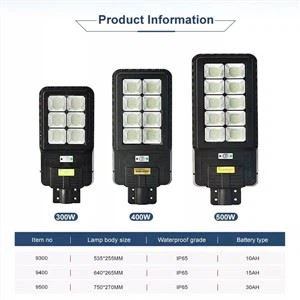
As a supplier of solar street lamp posts, I often get asked about the power output of a typical solar street lamp post. Understanding the power output is crucial for both suppliers and customers, as it directly impacts the performance, efficiency, and cost - effectiveness of these lighting solutions. In this blog, I'll delve into the factors that determine the power output of a solar street lamp post, and provide some insights into what you can expect from a typical setup.
Components of a Solar Street Lamp Post and Their Role in Power Output
A solar street lamp post is composed of several key components, each of which plays a vital role in determining its power output. These components include the solar panel, the battery, the LED light source, and the charge controller.
The solar panel is the heart of the system, responsible for converting sunlight into electricity. The power output of a solar panel is measured in watts (W) and is determined by its size, efficiency, and the amount of sunlight it receives. Larger solar panels generally have a higher power output, as they can capture more sunlight. Efficiency is also a crucial factor; a more efficient solar panel can convert a greater percentage of sunlight into electricity. For example, a high - efficiency solar panel might convert 20% of the sunlight it receives into usable electricity, while a lower - efficiency panel might only convert 15%.
The battery stores the electricity generated by the solar panel for use during the night or on cloudy days. The capacity of the battery is measured in ampere - hours (Ah) and is related to the amount of energy it can store. A larger battery capacity allows the solar street lamp to operate for longer periods without sunlight. However, the battery also affects the overall power output of the system, as its charging and discharging efficiency can impact how much of the stored energy is actually available to power the light.
The LED light source is what provides the illumination. The power consumption of an LED light is typically much lower than that of traditional lighting sources, such as incandescent or fluorescent bulbs. This makes LEDs an ideal choice for solar street lamps, as they can provide bright light while consuming less energy. The power of an LED light is measured in watts, and it directly affects how much energy is drawn from the battery to produce light.
The charge controller regulates the flow of electricity between the solar panel, the battery, and the LED light. It ensures that the battery is charged properly and prevents over - charging or over - discharging, which can damage the battery and reduce its lifespan. A good charge controller can also improve the overall efficiency of the system, thereby affecting the power output.
Typical Power Output Values
The power output of a typical solar street lamp post can vary widely depending on its design and intended use. For small - scale residential or pathway lighting, a solar street lamp might have a solar panel with a power output of around 20 - 50 watts. These lamps usually have a relatively small battery capacity, perhaps 10 - 20 Ah, and an LED light with a power consumption of 5 - 10 watts. This setup is sufficient to provide low - level lighting for a short period during the night.
For larger commercial or municipal applications, such as lighting roads or parking lots, the power output of the solar panel can be much higher, ranging from 100 - 300 watts or more. The battery capacity might be 50 - 200 Ah, and the LED light could have a power consumption of 20 - 100 watts. These high - power solar street lamps can provide bright, continuous lighting throughout the night, even in areas with limited sunlight.
Factors Affecting Power Output
Several factors can affect the power output of a solar street lamp post. The most obvious factor is sunlight availability. Solar street lamps rely on sunlight to generate electricity, so areas with more sunlight will generally have higher power output. The angle and orientation of the solar panel also play a crucial role. A solar panel that is tilted at the correct angle and faces the sun directly can capture more sunlight and generate more electricity.
The weather conditions can also have a significant impact. Cloudy, rainy, or foggy days can reduce the amount of sunlight reaching the solar panel, thereby decreasing the power output. In addition, dust, dirt, or snow on the solar panel can block sunlight and reduce its efficiency. Regular cleaning and maintenance of the solar panel are essential to ensure optimal power output.
The quality and age of the components can also affect power output. Over time, solar panels can degrade, reducing their efficiency. Batteries can lose their capacity, and LEDs can dim or fail. Using high - quality components and replacing them when necessary can help maintain the power output of the solar street lamp post.
Applications and Power Requirements
The power requirements of solar street lamp posts vary depending on their applications. For Solar Street Light with CCTV Camera, in addition to powering the LED light, the system also needs to supply electricity to the CCTV camera. This requires a higher power output solar panel and a larger battery capacity to ensure continuous operation of both the light and the camera.


Outdoor 12v Dc Led Solar Street Light are commonly used in gardens, parks, and small pathways. These lights usually have lower power requirements, as they only need to provide sufficient illumination for people to move around safely. They can be designed with smaller solar panels and batteries, making them more cost - effective for these types of applications.
Separate Solar Street Light are often used in large - scale projects, such as highway lighting. These lights typically have higher power output requirements to provide bright and uniform lighting over a large area. They are usually equipped with larger solar panels, high - capacity batteries, and powerful LED lights.
Contact for Procurement
If you are interested in purchasing solar street lamp posts for your project, whether it's a small residential area or a large - scale commercial development, I'm here to help. I can provide you with detailed information about the power output, performance, and cost of our solar street lamp posts. We offer a wide range of products to meet different power requirements and applications. Please reach out to us to start the procurement discussion and find the best solar street lamp solution for your needs.
References
- "Solar Photovoltaic Systems: Design and Installation" by John Wiles
- "LED Lighting Technology: Principles and Applications" by Zhigang Liu
- Industry reports on solar street lamp technology and market trends.