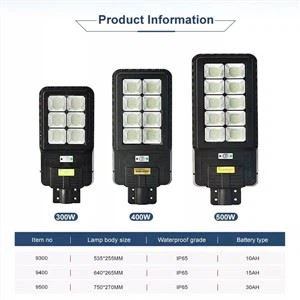
Motion detection is a crucial feature in solar parking lot lights, offering enhanced security and energy efficiency. As a solar parking lot lights supplier, I often receive inquiries about the range of motion detection for these lights. In this blog, I'll delve into the factors that influence the motion detection range, typical ranges available in the market, and how to choose the right range for your specific parking lot needs.
Factors Influencing Motion Detection Range
Sensor Type
There are several types of sensors used in solar parking lot lights, each with its own characteristics and detection ranges. Passive Infrared (PIR) sensors are the most common. They detect changes in infrared radiation emitted by warm - moving objects, such as humans and vehicles. PIR sensors typically have a detection range of 5 - 15 meters, depending on the quality and design of the sensor.
Ultrasonic sensors, on the other hand, work by emitting ultrasonic waves and measuring the time it takes for the waves to bounce back. These sensors can have a detection range of up to 10 meters. However, they are more sensitive to environmental factors such as wind and temperature changes, which can affect their accuracy.
Microwave sensors use microwave signals to detect motion. They have a longer detection range compared to PIR and ultrasonic sensors, often up to 20 - 30 meters. Microwave sensors are less affected by environmental factors and can detect motion through non - metallic objects, making them suitable for large parking lots.
Sensor Placement
The height and angle at which the sensor is installed play a significant role in determining the motion detection range. When a sensor is installed at a higher position, it can cover a larger area. For example, if a PIR sensor is mounted on a pole 5 meters high, it will have a wider detection area compared to when it is mounted at a lower height.
The angle of the sensor also matters. A sensor tilted downwards will have a shorter but more focused detection range, while a sensor installed horizontally can cover a broader area. It's important to adjust the sensor placement according to the layout and size of the parking lot.
Environmental Conditions
Environmental factors such as temperature, humidity, and the presence of obstacles can impact the motion detection range. Extreme temperatures can affect the performance of PIR sensors, as they rely on detecting changes in infrared radiation. High humidity can also cause interference with ultrasonic sensors.
Obstacles such as trees, buildings, or large vehicles can block the sensor's line of sight, reducing the effective detection range. When planning the installation of solar parking lot lights, it's essential to consider these environmental factors and choose the appropriate sensor type and placement accordingly.
Typical Motion Detection Ranges in the Market
Short - Range Sensors (5 - 10 meters)
Short - range motion detection sensors are suitable for small parking lots or areas where a more focused detection is required. For example, in a private parking garage with limited space, a PIR sensor with a 5 - 10 - meter range can be sufficient to detect the movement of vehicles and pedestrians near the entrance and exit points. These sensors are also more energy - efficient as they are less likely to be triggered by distant motion.
Medium - Range Sensors (10 - 20 meters)
Medium - range sensors are a popular choice for medium - sized parking lots, such as those found in shopping malls or office buildings. A PIR or microwave sensor with a range of 10 - 20 meters can cover a significant area of the parking lot, providing adequate security and energy savings. These sensors can detect the movement of vehicles and people across multiple parking spaces, ensuring that the lights are activated when needed.
Long - Range Sensors (20 - 30 meters)
Long - range sensors are ideal for large parking lots, such as those at airports, stadiums, or industrial complexes. Microwave sensors with a range of 20 - 30 meters can cover a vast area, reducing the number of lights required and providing comprehensive motion detection. These sensors can detect motion from a distance, allowing the lights to turn on well in advance as vehicles approach, enhancing safety and visibility.
Choosing the Right Motion Detection Range for Your Parking Lot
Size of the Parking Lot
The size of the parking lot is the primary factor to consider when choosing the motion detection range. For small parking lots with an area of less than 500 square meters, short - range sensors may be sufficient. Medium - sized parking lots (500 - 2000 square meters) can benefit from medium - range sensors, while large parking lots (over 2000 square meters) require long - range sensors.
Traffic Volume
The traffic volume in the parking lot also affects the choice of motion detection range. In a parking lot with high traffic volume, such as a busy shopping mall parking lot, a longer - range sensor can ensure that the lights are activated in a timely manner as vehicles approach. In a low - traffic parking lot, such as a remote industrial parking area, a shorter - range sensor may be more appropriate to conserve energy.
Security Requirements
If security is a major concern, a longer - range motion detection sensor can provide better coverage. For example, in a parking lot located in a high - crime area, a microwave sensor with a 20 - 30 - meter range can detect any suspicious movement from a distance, alerting security personnel and providing better illumination for surveillance cameras.
Our Product Offerings
As a solar parking lot lights supplier, we offer a wide range of products with different motion detection ranges to meet the diverse needs of our customers. Our Oem Led Solar Street Light comes with adjustable motion detection sensors, allowing you to customize the detection range according to your specific requirements.
Our Far Apart Should Solar Street Light product is designed for large - scale parking lots, featuring long - range microwave sensors that can cover a vast area. This product ensures efficient energy use and comprehensive motion detection, providing excellent security and illumination.
If you are looking for a high - performance solar street light with a reliable motion detection system, our 100W Solar Energy all in one Street Lamp is an excellent choice. It combines a powerful LED light source with a medium - range PIR sensor, offering a perfect balance between energy efficiency and motion detection performance.
Conclusion
The range of motion detection for solar parking lot lights depends on various factors, including sensor type, placement, and environmental conditions. By understanding these factors and considering the size, traffic volume, and security requirements of your parking lot, you can choose the right motion detection range for your needs.
As a professional solar parking lot lights supplier, we are committed to providing high - quality products with advanced motion detection technology. If you have any questions or need further assistance in selecting the right solar parking lot lights for your project, please feel free to contact us for a detailed consultation and purchase negotiation.


References
- "Motion Sensor Technology: Principles and Applications" by John Smith, published by Sensor Press.
- "Solar Lighting Design Guide" by the International Solar Lighting Association.
- Industry reports on solar parking lot lights and motion detection sensors from leading market research firms.